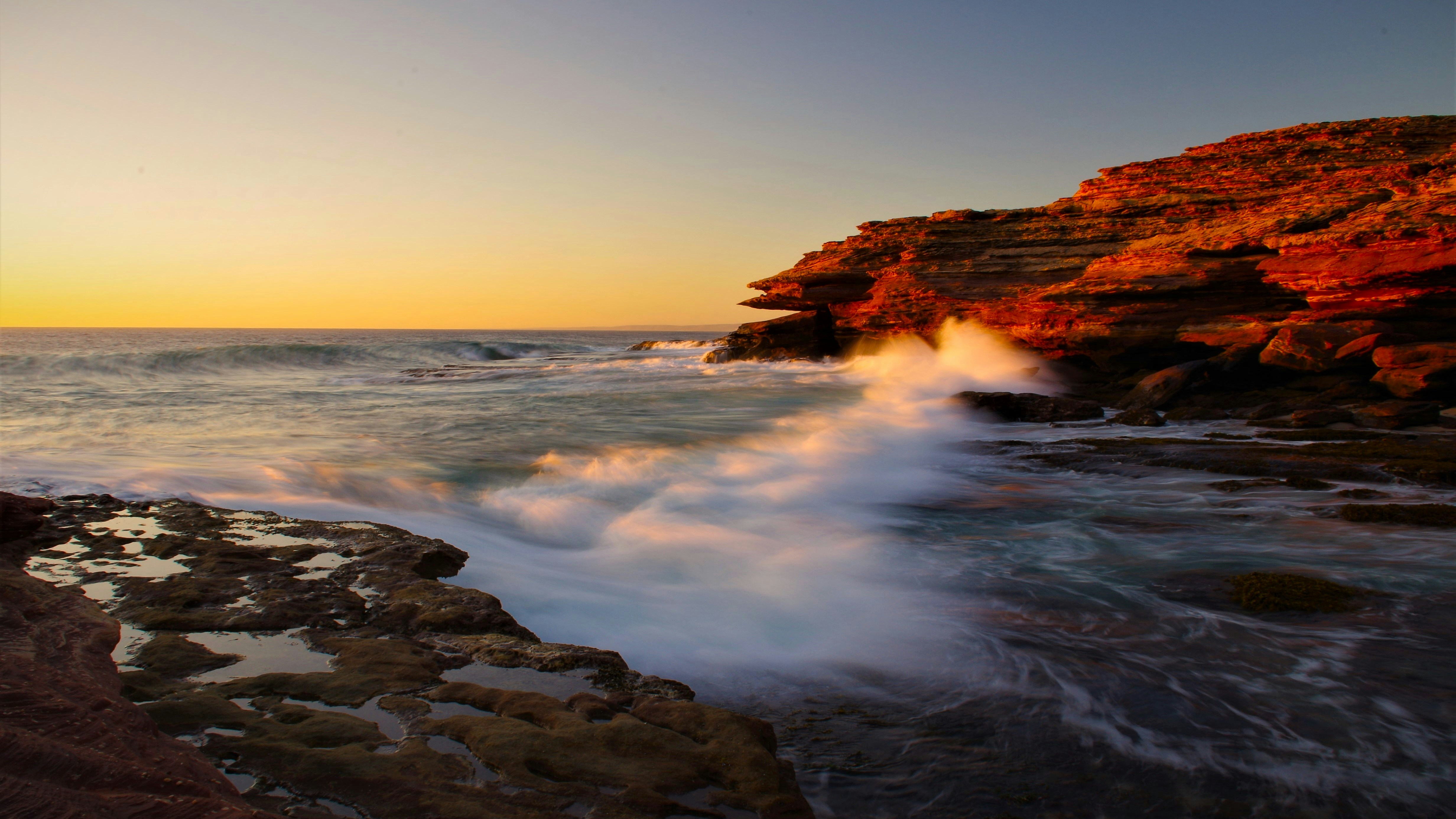
Once you leave the South West, Western Australia changes.
Towns spread out. Fuel stops become deliberate decisions. The coastline feels less curated and more indifferent. The beaches are still there — often better — but you work harder to reach them.
This is where WA starts to feel like itself.
Distance Becomes the Main Character
North of Perth and east beyond Albany, the scale increases quickly.
Three hours on the road stops feeling like travel and starts feeling normal. You don’t detour casually. You plan loops around fuel range and daylight.
A simple mistake here isn’t inconvenient — it costs time.
That’s not a warning. It’s part of the appeal.
When the coastline opens up after a long stretch of highway, it feels earned.
Services Thin Out
Outside the major centres — Geraldton, Exmouth, Albany, Esperance — you rely more on what you’re carrying.
- Water tanks matter.
- Recovery gear isn’t optional.
- Shade becomes valuable.
- Mechanical reliability matters more than layout.
There are still caravan parks and formal camps, but the further you go, the more self-sufficient you need to be.
If you prefer predictable infrastructure, this part of WA will feel uncomfortable.
If you prefer space, it will feel right.
The Coastline Gets Wilder
The beaches become:
- Longer
- Less signposted
- Less protected
- Less crowded
You’ll find stretches where you can walk for half an hour without seeing anyone else. That’s not unusual.
But exposure increases too. Wind hits harder. Swell wraps differently. Access tracks can be rougher and less forgiving.
There’s less margin for casual mistakes.
You read the ocean more carefully here.
Camps Change Character
In the South West, camps are often near towns or structured sites.
Further out:
- You’re often camping near nothing.
- Wind protection isn’t guaranteed.
- Mobile reception disappears quickly.
Some of the best camps in WA are quiet gravel clearings overlooking empty coastlines.
They are also fully exposed to weather.
Choosing a site becomes less about the view and more about:
- Wind direction
- Ground firmness
- Exit route if rain hits
The Pace Slows — Whether You Want It To or Not
You can’t rush this part of WA effectively.
Distances enforce slower movement. Weather dictates swimming windows. Supplies influence route changes.
The days simplify.
- Drive.
- Set up.
- Check conditions.
- Swim if it makes sense.
- Sit if it doesn’t.
There’s less external noise, fewer decisions shaped by convenience.
Why This Is Where WA Makes Sense
Beyond the South West, WA stops feeling like a weekend destination and starts feeling like a place you move through deliberately.
It’s not glamorous travel. It’s not efficient.
It’s long roads, quiet mornings, strong wind, and water that looks different depending on the hour.
If you’re travelling with your setup — trailer or van — and you’re prepared to adapt, this is where the state starts to show why it works so well for road and reef travel.
Not because it’s easy.
Because it isn’t.